 SHEYU.AI
AI in commercial complexes: fix the books before replacing the people
China's "AI+" policy pushes artificial intelligence into business operations, but in commercial property the first useful win is tracking leads, bills and meter readings, not automation.
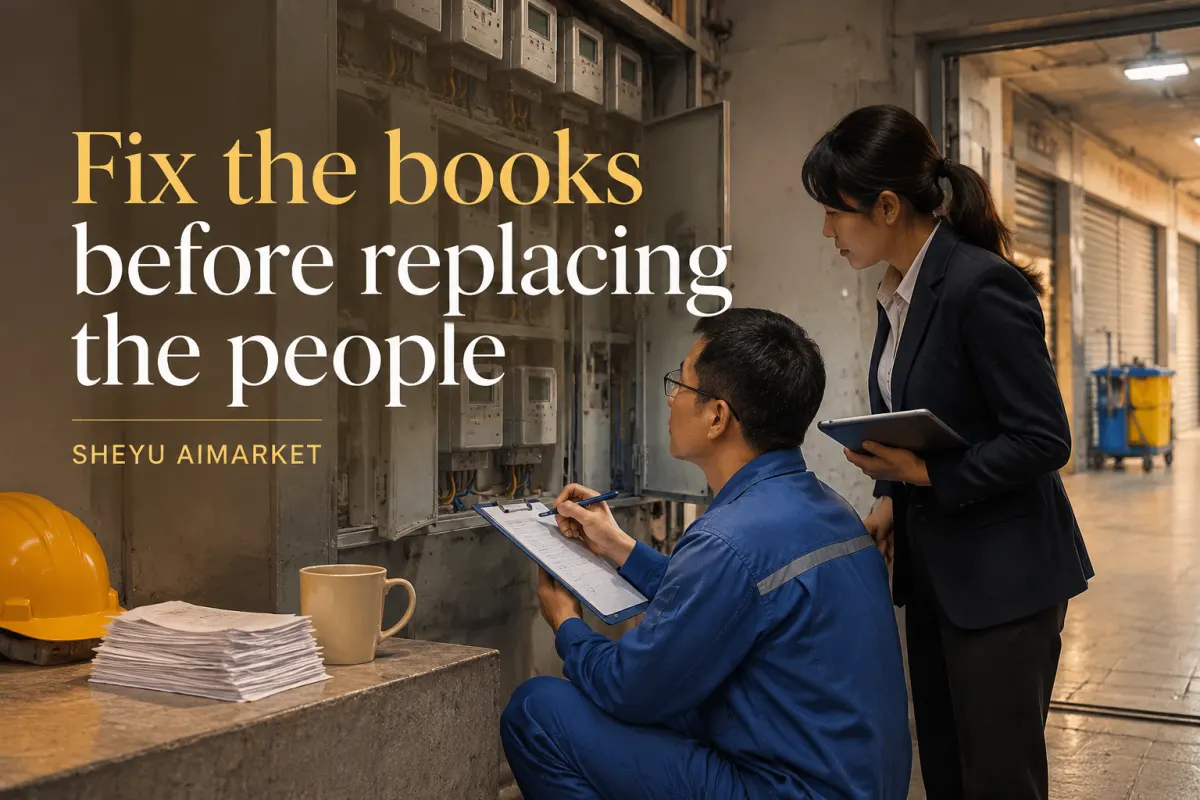
The most valuable AI deployment in a commercial complex today is not unmanned operations. It is turning rent, bills and meter readings — things that go wrong every day — into processes that actually run inside a system.
China's State Council has issued an opinion on deepening the "AI+" initiative, a document whose weight any business operator will recognise: it moves AI from a technology topic to an operating topic. But for an owner managing tens of thousands of square metres of commercial space, the policy comes down to one question — which part of my operation can AI actually hold?
Our view: AI cannot close a leasing negotiation. It can track whether leads are being followed, whether bills are being chased, and how many days a unit has sat empty. Neither sounds sophisticated, but the second is where money leaks every day.
Where AI changes commercial leasing first
Start with a premise. Running a commercial complex is fundamentally about managing every square metre of rent and every bill in plain sight. Shu Yi, executive director of Sheyu Jiye, puts it plainly: the biggest fear in leasing follow-up is not a lack of leads, but leads sitting with nobody chasing them.
That points to a long-standing structural waste in the industry. The problem is not missing data; it is data scattered across people's heads, spreadsheets and chat groups. When a leasing manager leaves, leads leave with them. When finance staff change, working out which tenant is months in arrears takes half a day. Property teams read meters on paper slips, then re-enter the figures at month-end, and a single wrong digit means rounds of back-and-forth.
What AI can do here is modest: pull scattered operating data into one entry point so a person can ask for it in a sentence. SHEYU AIMARKET's AI assistant, for example, runs read-only queries on units, contracts, bills, leads, work orders and meter readings using the logged-in user's own permissions — asking "which bills are overdue", "which leads need follow-up", "which unit has been vacant longest". It does not modify data. Fund-related actions such as meter reading and billing, contract activation, and deposit refunds on exit are still initiated by people on the business pages.
That boundary matters. AI does not make decisions for the owner; it puts the numbers the owner should see in front of them first. We think Shu Yi's line is the most honest description of enterprise AI deployment today.
The counter-argument: isn't this just reports on a phone?
This is the objection we hear most, and it deserves a serious answer.
If it were merely moving reports onto a phone, there would be nothing new — BI tools have done that for a decade. The difference lies in two things: whether the data is one set, and whether the person asking has permission to see it.
In the traditional setup, leasing looks at leasing reports, finance at finance reports and property at property reports, and the three sets routinely fail to reconcile. SHEYU AIMARKET runs asset leasing control, leasing CRM, contracts and bills, finance receipts, and property meter reading in one system: contract activation generates bills automatically, payment runs through reminder notices with payment QR codes, WeChat and Alipay online payment is supported, and payments automatically accrue tenant points. With data from one source, the numbers reconcile.
Permissions matter more. The AI assistant executes queries with the logged-in user's own credentials, and tenant-merchant isolation applies to it as well, so it cannot see data the user has no right to see. The owner asks about the whole picture; a leasing manager asks about their own leads. Each sees their own scope, without overreach.
But we should be clear about when this does not hold. If a complex's contracts, bills and meter readings are scattered across five or six systems and there is no near-term plan to integrate them, then bolting on an AI query entry point alone has limited value — it cannot ask for data that does not exist. The precondition for the AI assistant is that operating data already runs in this system.
What this means for smaller firms and overseas teams
One angle is easily overlooked.
For teams running commercial property, parks or market-type assets overseas, the biggest headache is often not leasing but being absent from the site. Time zones alone mean a China-based owner wanting to check arrears on a unit must either wait for the local team to start work or dig through email.
One account, one AI core, multi-device collaboration — the value of this structure for cross-time-zone operations is not technical sophistication but getting an answer, within your own permissions, from a single question. Asset leasing control supports drill-down by project, zone, floor and unit, with colour floor plans marking leased, vacant, expiring and arrears status, and a full profile for each unit. Business analysis includes cash-flow forecasting, renewal-rate trends, vacancy-days ranking and efficiency-loss rates.
The numbers themselves are not new. What is new is that they can be asked for in a sentence rather than waiting for month-end reports.
One thing to do now
Another line of Shu Yi's we agree with: when going digital, start with the thing that repeats every day and goes wrong every day.
For commercial complexes and market-type assets, that is most likely meter reading and payment chasing. There is no need to replace the whole system at once. Get these two processes running first — data into the system, bills generated automatically, arrears made visible. Only then does the AI assistant have something to answer.
Policy sets the direction and tools set the path, but what decides success is still whether the operator is willing to manage that most basic set of books in plain sight.