 SHEYU.AI
UK customs in 2026: why a box of identical items can turn a personal parcel into a commercial one
Stricter UK customs rules and peak-season surcharges are shifting the burden of proof onto the parcel itself, catching out Chinese diaspora senders and UK-facing sellers.
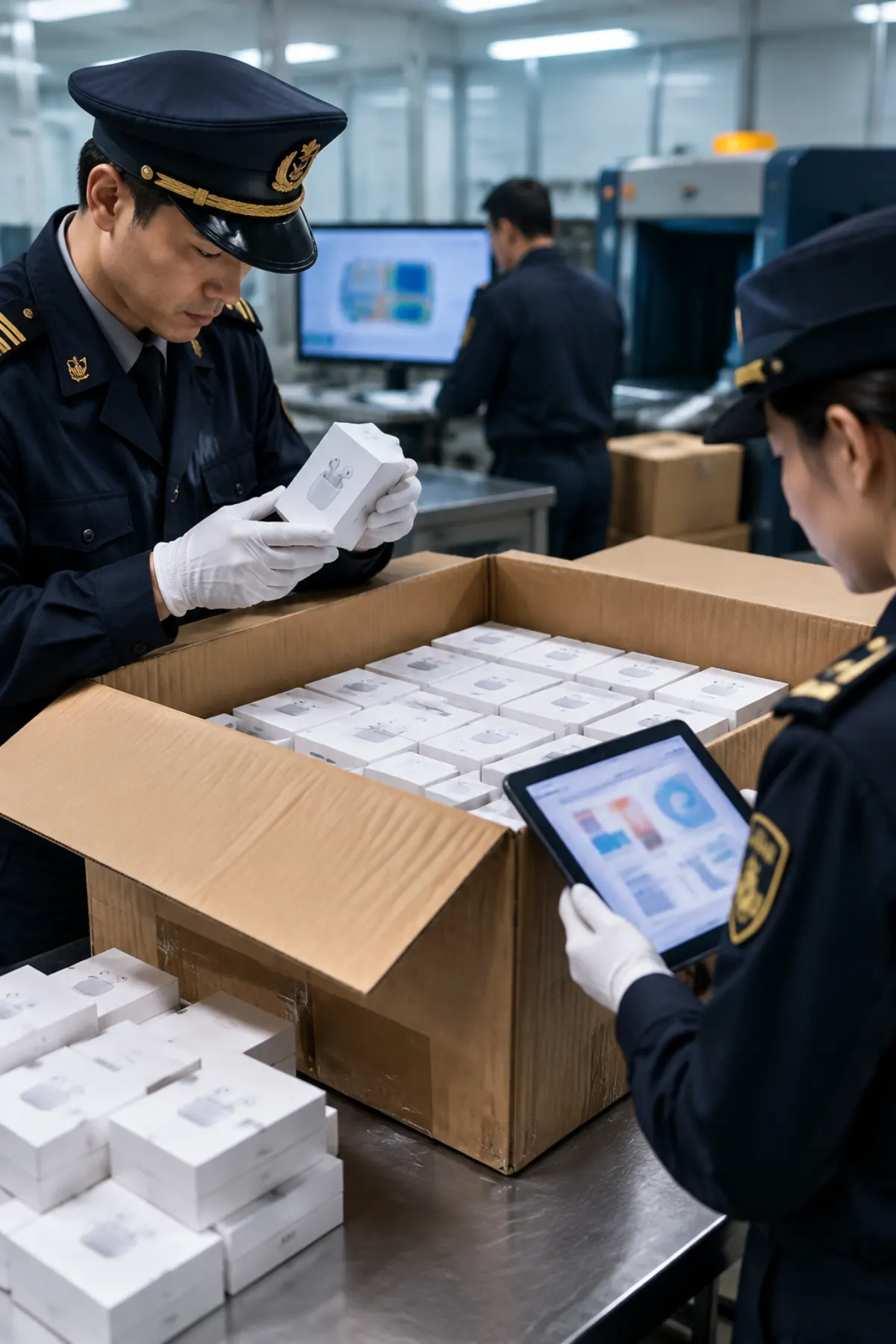
In 2026, UK-bound customs rules and peak-season surcharges are tightening at the same time. For Chinese communities in Britain and sellers running UK storefronts, the long-used shortcut of declaring goods as personal effects is becoming a clear compliance and cost risk. What gets held up is rarely the cargo itself — it is the logic of the declaration.
The test has shifted from what you say to what the parcel looks like
The conclusion first: parcels that could once be explained away as personal effects will, in a substantial number of cases in 2026, no longer pass.
According to the 2026 China-UK Consolidation Handbook published by consolidation service provider Zhuque Jiyun, purely personal parcels without an EORI number — the UK's Economic Operators Registration and Identification number, required for commercial imports — are strictly prohibited from containing bulk quantities of identical goods or large volumes of new, unopened stock. If they do, they are classified as concealed commercial cargo, detained outright, and required to submit full commercial clearance documentation, incurring high storage and clearance fees.
The handbook also lists high-risk categories frequently detained in 2026: fresh fruit and vegetables, meat, cooked foods, dairy products, plant and animal seeds and derivatives, as well as live organisms, soil, specimens and flammable or explosive materials. One observation in the handbook is apt: many people have parcels held not because they shipped prohibited items, but because they did not understand the UK's latest restricted-goods rules.
Why the personal-effects playbook used to work
It is worth reviewing how this approach became standard.
The backdrop is Britain's large Chinese households, students and small sellers: fragmented demand, small order volumes, low cargo value. Going through formal commercial clearance requires an EORI, VAT, invoices, a customs broker — time and money that do not add up.
So the personal-effects parcel became the default: no EORI, a few mixed boxes, identical items kept to two or three, tags removed, shipments split. This logic held for most years, because customs resources are limited and inspection priorities sit with high-risk categories and channels.
Its precondition was that the sender held the right of explanation. If you said it was for personal use, and it was not too far-fetched, it went through.
Detention is only the first bill
What has changed in 2026 is that the right of explanation has been handed back to the parcel itself.
The chain runs like this: detention, then a demand for commercial clearance documentation, then storage and clearance fees. The goods are still there, but they burn money every day; supplying the documents takes time and manpower — exactly what a two- or three-person team can least afford.
The second bill comes from peak-season surcharges. According to industry information compiled by Yiqi International Express, peak surcharges in 2026 are being raised in relay: FedEx is adding a demand surcharge of up to $0.91 per pound on priority China-origin shipments; UPS per-piece surcharges range from $8.75 to $117.5; DHL is expected to follow on 1 October 2026. The report also notes that once fuel surcharges are layered on, the rise in total cost per shipment may exceed the announced figures.
This is a double blow: detained goods rack up port-storage costs, while goods that clear are getting more expensive.
The third bill sits at the after-sales end. According to a Shopify peak-season note published by Chuhaiwang, BFCM does not begin on Black Friday itself, nor does it end once goods are shipped; returns handling in both the US and UK needs to be planned in advance. UK apparel sellers also face the problem of returns being swapped — local reshipment, return to China, or outright destruction carry very different costs.
Three common moves among local peers
We observe several shared practices.
First, treating "does it look commercial" as a design question at the packing bench. The number of identical items, whether packaging is opened, whether goods are mixed, whether declared value matches everyday personal consumption — all are fixed at the packing stage, leaving nothing to be explained at the clearance window. Controlling the quantity of identical items in personal consolidation is the most easily overlooked of these moves.

Second, qualifying in advance. EORI, VAT and invoices are prepared before shipping, not after a detention. This aligns with the broader cross-border compliance trend: according to a compilation by ESG Cross-Border, in 2026 US and European law firms jointly launched large-scale TRO infringement freezes targeting cross-border sellers, and items involving multinational compliance, logistics timelines and commission deductions now go through full-chain digital reporting and system-level checkpoints, significantly compressing the grey space of the past.
Third, treating returns as part of shipping. Which categories to reship locally, which to destroy outright, and which are worth returning to China — all calculated in advance.
What AI can and cannot handle
What it cannot handle first: the power of judgment rests with customs, and no tool can decide on its behalf.
Three areas it can address.
One is document consistency. Cross-checking commercial invoices, packing lists, product names and declared values is rule-based, highly repetitive work — what tools do best.
Two is localised response. ESG Cross-Border noted in a review that the absence of a localised response mechanism — communication time differences plus stiff machine translation — directly triggers buyer disputes and can even lead to platform throttling. Making after-sales scripts sound locally written matters far more than whether they can be translated into English.
Three is cost modelling for returns routes. Each of the three paths carries freight, taxes, timelines and residual-value losses — an arithmetic problem that can be modelled, and one where human calculation most easily misses items.
The takeaway
The real change for UK-bound shipments in 2026 is not that any single rule has become stricter, but that the burden of proof in compliance has moved forward. For Chinese communities in Britain and UK-facing sellers, what can be done today is to build compliance at the packing bench, not at the clearance window. SHEYU's view is that after this round of tightening, operators who can explain their declaration logic clearly will survive more steadily than peers with better goods but no clear explanation.