 SHEYU.AI
China's $35bn trade-in fund is fully allocated, and AI stores want mall space
All 250bn yuan of this year's consumer trade-in funding is now allocated, and three physical AI store formats are already open in Chinese malls.
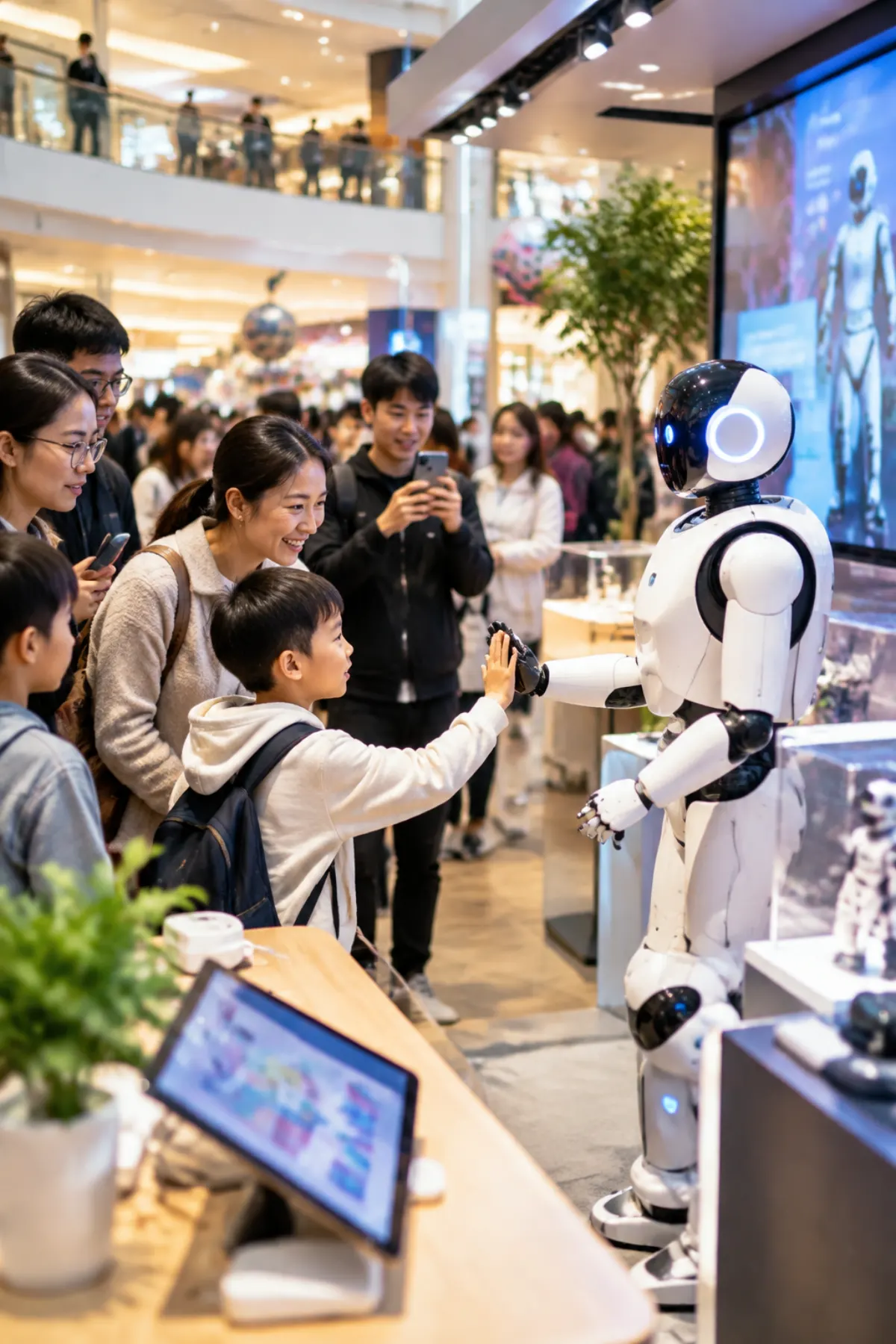
China's trade-in money is now fully committed, and a new kind of storefront is taking shape in shopping centres: one that asks customers to touch, try and linger. For mall leasing teams, that changes the terms of the conversation.
The money and the policy are in place; the floor space is not
This is not a concept story. On 30 September the National Development and Reform Commission said it had, together with the Ministry of Finance, issued the fourth and final tranche of 62.5bn yuan in ultra-long special treasury bonds for consumer trade-ins this year, bringing the full-year total to 250bn yuan. (Trade-in subsidies are fiscal payments to consumers who hand back old appliances or digital devices and buy new ones.)
The same month, the Ministry of Commerce and other departments issued an action plan to promote smart-home consumption. It proposes that, under the 2026 trade-in policy framework, local authorities be supported in setting subsidy categories and subsidy standards for smart-home products themselves, according to local conditions, and in coordinating support for whole-home smart purchases.
That last clause is the one leasing teams should watch: subsidy categories are not drawn centrally but decided city by city. The same brand may be able to display a "national subsidy" sign in one city and not in another. Before negotiating, establishing the local rules is more useful than opening with rent.
Three store formats have already opened
Not every AI product suits a mall. Three existing examples are worth studying.
In Wuhan's Wushang Dream Mall, the country's first "AI Home · Artificial Intelligence Consumer Experience Centre" opened in September, with living room, kitchen and bedroom laid out as show flats and many products carrying "national subsidy" labels. In Beijing, Taozhu Xinzaoju, a robot technology experience brand under Shouchuang Holdings, marked its first anniversary during the National Day holiday and opened another store in Changping on 26 September; it now has eight stores in Beijing, gathering more than 200 robot and AI hardware products. In Nanjing, Suning's AI smart store Suning NEXT Future Space opened its first national outlet during the holiday, positioned as an "AI life rehearsal space" with a dedicated Token experience zone.
A comment from the head of Taozhu Xinzaoju is worth copying into a leasing notebook: smart consumption is moving from "concept display and tech novelty" into "real-scenario validation and consumption conversion". Three categories have emerged — AI companionship and AI collectibles; tech entertainment such as smart instruments and 3D printing; and highly interactive products such as robot dogs and robots.
The three share one trait: they need people to handle them, people to gather round, and people willing to stand there ten minutes longer. That dictates the pitch: frontage on a main walkway, room for a experience zone, and no fear of noise.
Answering the most common objection
The objection usually runs: this is a fad, it will disperse once subsidies fade, and malls need not restructure their leasing for it.
The first half and the second half of that judgment are not the same thing. Suning data published on 7 October showed footfall at core national stores rose 50% year on year between 1 and 7 October, AI smart appliance sales rose more than 40%, and sales of smart watches, AI glasses and action cameras climbed, with young consumers accounting for more than 80% of the customer base. The traffic mix is already shifting, not waiting for subsidies to end.
Fu Yifu, a guest researcher at Sunsu Bank, puts it more directly: AI smart product stores can serve as a "traffic anchor", drawing footfall and extending dwell time with novel experiences, pulling along nearby food, leisure and social spending, and pushing malls from traditional retail space towards experience centres. They are also a testing ground for the digital upgrading of offline retail.
So this is not "one more tenant selling goods" but "a change in the traffic mix". What opponents really worry about is not whether the trend will stop, but that experience formats have volatile sales per square metre and cannot support fixed rent. That is a contract-design problem, not a question of whether to recruit at all.

Three thresholds, and a window in the fourth quarter
The first is space: can customers actually play with the products? The second is policy qualification: local subsidy categories and standards are not unified, so whether a national subsidy sign can be displayed must be checked first. The third is the most easily overlooked — contract structure. How fixed rent and revenue share are combined, how long the fit-out rent-free period runs, and how subsidy redemption amounts align with turnover are harder to calculate in experience formats than in restaurants.
The timing is clear too: the full 250bn yuan of trade-in funding was allocated by 30 September, the fourth tranche of 62.5bn yuan has just landed, and the fourth quarter is the window for absorbing it. On the brand side, Taozhu Xinzaoju was still opening new stores at the end of September. To capture this wave, leasing moves are best completed within the fourth quarter; negotiate later and the conversation is about next year's space.
How to act
The first step is unglamorous: write "AI experience store" into the leasing ledger as a formal category — build a category file, keep follow-up records, and turn "fixed rent plus revenue share plus rent-free period" into a contract template that can be reused. Today this mostly sits scattered across spreadsheets and messaging apps, and by the third negotiation it becomes a mess.
For this, look at SHEYU AImarket. It serves leasing operations for general markets and shopping centres, bringing asset and lease control, leasing CRM, a contract and billing engine, and property IoT into one system; an AI steward can handle leasing follow-up, bill chasing, and meter reading and invoicing. In the scenario described here, that means the new category leaves a traceable line from enquiry through negotiation and signing to billing, and revenue share and rent-free periods do not have to be reconciled by hand at every month end.
Subsidies will come in rounds, but the floor area inside a mall that customers can actually touch is finite. Treating it as a category first matters more than talking price first.