 SHEYU.AI
AI in commercial leasing: why most landlords still won't trust it with the books
Landlords hesitate on AI in leasing not because of cost but because their rent-control, contract-billing and meter-reading records don't reconcile; the piece explains why billing and reconciliation come first, what a read-only AI steward ca
AI in commercial leasing: why most landlords still won't trust it with the books
Landlords are not holding back on AI because the software is expensive. They are holding back because their numbers do not agree with each other, and an AI fed conflicting records can only guess.
A policy signal without detail
Singapore's Infocomm Media Development Authority (IMDA) has published updated material on its industry digitalisation plan for the maritime and offshore energy sectors, according to the agency's website. The material carries no verifiable publication date and does not state subsidy amounts or eligibility criteria. What it confirms is narrow: the authority is pushing specific industries to digitalise more deeply. How support works, who qualifies and how much is involved are not in the text, and we do not fill those gaps here.
That gap is the point. The real barrier to AI in leasing is not whether a landlord can afford it, but whether the accounts can be reconciled.
Why smarter tools make owners more cautious
Because a leasing business does not keep one set of books.
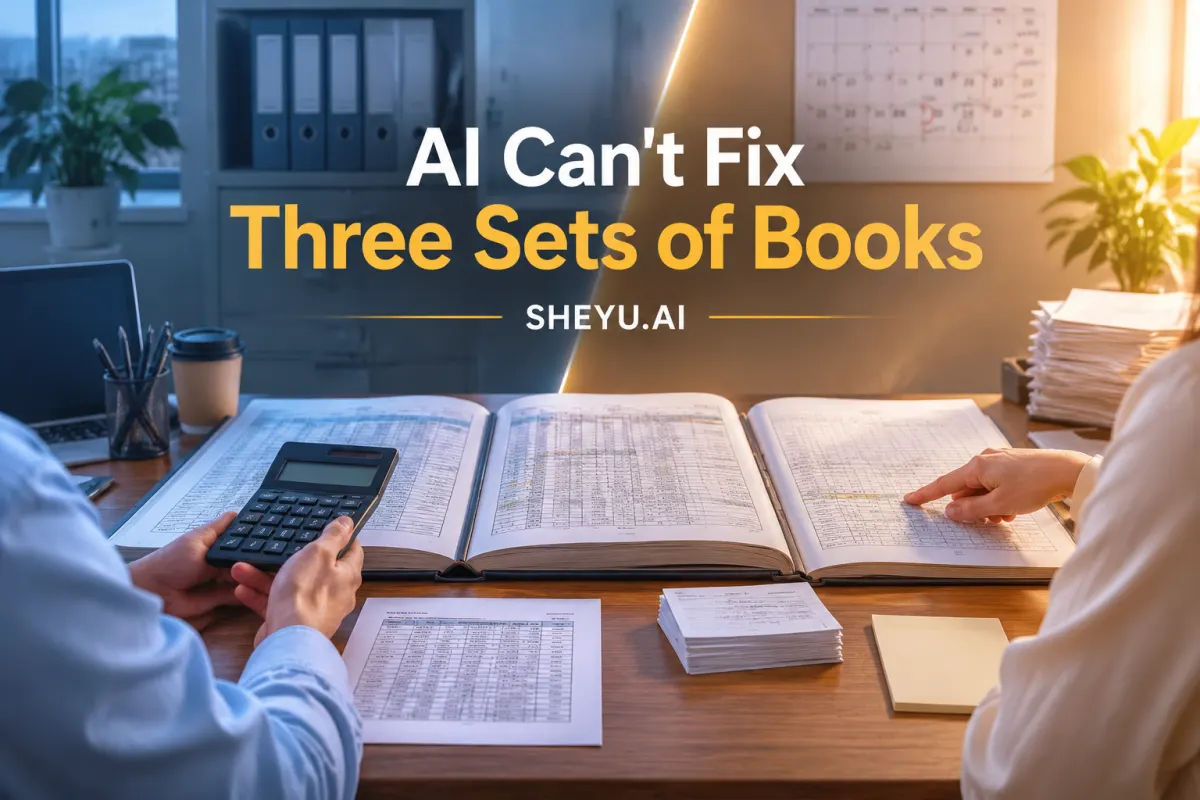
Shu Yi, executive director of Sheyu Jiye, argues that running a commercial complex means managing every square metre of rent and every bill in plain view. SHEYU.AI frames this as the "three sets of leasing books": the rent-control ledger, the contract-and-billing ledger, and the property meter-reading ledger.
Keep them apart and the trouble starts. How long a unit has sat empty, which bill is overdue, which meter was read wrong — each sits in its own table. An owner asking "which unit has been vacant longest" has to find someone to check three tables first. However capable the AI, feed it three sets of numbers that do not match and the answer can only be a guess.
So many owners do not lack the will to use AI. They lack the confidence to trust it. If the numbers are wrong, anything the AI says sounds like a sales pitch.
The counter-argument: adopt first, tidy the books later?
No. The order is backwards.
The usual objection is that AI tools are cheap and quick to adopt, so use them first and optimise the process afterwards. That holds in content marketing. It does not hold in leasing. Every payment in leasing hangs on a contract: billing starts when the contract takes effect, and the account clears on exit. A billing date off by one day means a payment reminder off by one day; a meter read off by one unit means a tenant at the counter.
Shu Yi makes a point we share: when digitalising, start with the task that repeats every day and goes wrong every day. In leasing, that task is billing and reconciliation.
There are cases where this judgment does not apply. A market with only a few dozen units, a handful of contracts a year and books one experienced accountant can keep in order does not need AI first; a disciplined, well-kept manual spreadsheet is the better buy. AI-native systems solve the problem of volume outrunning human capacity. They do not replace a process that was never broken.
What the AI can actually do here
According to the SHEYU AImarket website, the commercial leasing system runs contracts, bills, commissions and meter readings on a database transaction engine: billing starts when a contract takes effect, and the account clears on exit. An AI steward can answer in one sentence which bills are overdue, which leads need follow-up and which unit has been vacant longest. It answers read-only, querying within the permissions of the logged-in user and never beyond them.
Note the boundary: it is read-only. It puts the numbers you should see in front of you; it does not decide for you. In Shu Yi's words, AI does not make decisions for the owner — it lays out the numbers the owner ought to see first. The real fear in leasing follow-up is not a lack of leads but leads sitting with nobody chasing them. The AI can flag which one is due for a call; a person still makes the call.
What the system does not do should also be clear: it does not judge whether a tenant should renew, does not negotiate rent, and does not guarantee any subsidy. Policy is policy and tools are tools; do not mix the two.
One thing to do now
Lay out the three sets of books and see which is the messiest.
If the rent-control ledger is the problem, fix the mismatch between unit status and contracts first. If meter reading and billing are the problem, fix the calculation that repeats every month. Shu Yi's test for software is not the length of the feature list but whether it lets frontline staff do one step less. That is a usable ruler.
On the policy window, our advice is to wait for the official text. The IMDA material indicates direction only and gives no detailed rules. Until eligibility, deadlines and amounts appear in the original, treat any claim that "applying now gets you the money" with suspicion. Straighten the books first; when the rules land, you will be in a position to act on them.