 SHEYU.AI
BYD plans four European plants as Chinese battery firms face Munich court test
BYD's plan for four European factories and a Munich patent suit against Sunwoda show how Chinese firms are shifting from selling abroad to staying abroad.
Chinese firms going global are finding that the hard part is no longer making the sale but staying put. Three developments in September 2026 — BYD's European factory plan, an air-freighted EV shipment to the Middle East, and a patent ruling in Munich — point to the same shift.
Four plants, framed as an answer to EU rules
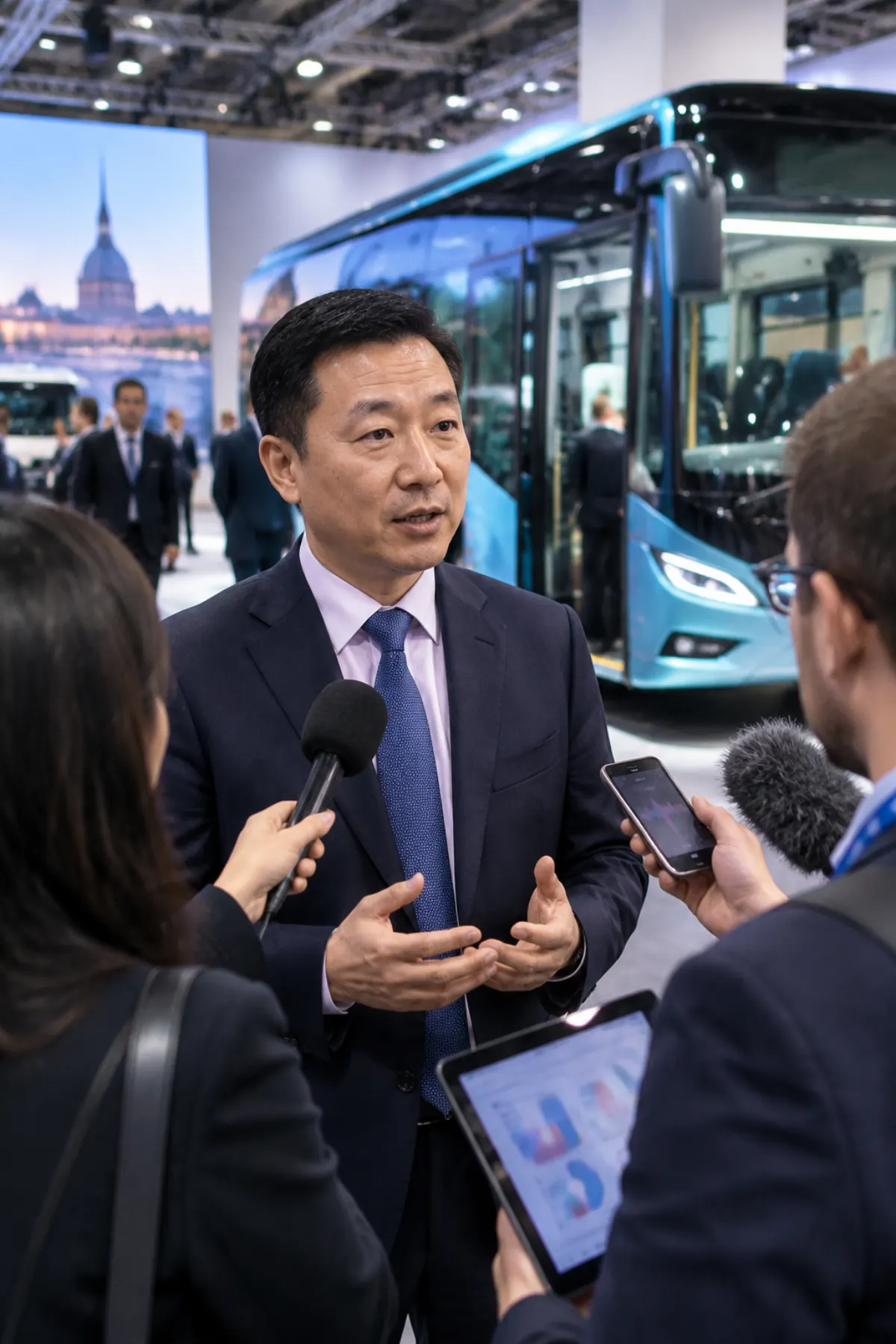
On 17 September 2026, Bloomberg reported that BYD plans to build four factories in Europe over the long term: three vehicle assembly plants and one EV battery plant.
The source was Alfredo Altavilla, a former Fiat Chrysler executive who now advises BYD in Europe. Speaking to reporters at an event in Turin, he said: "This is not something that can be achieved tomorrow morning, but clearly, to reach the sales targets we have set and at the same time comply with EU rules, we will eventually need to do this."
The informative part is the second half. The logic is not that Europe is a big market, but that compliance with EU rules is now a condition of scale. Tariffs, carbon emissions and local-content requirements are being calculated more finely each year, and the ceiling on pure exporting is visible. Putting assembly and battery plants in Europe converts compliance costs into fixed assets and shortens logistics and delivery times. The combination of three vehicle plants and one battery plant suggests BYD is not just after a final-assembly workshop; it wants the heaviest and most sensitive part of the chain, the battery, located there too.
The cost is equally clear: factories are capital-intensive, slow to build and require long-term engagement with local unions and governments. Not every company going abroad can afford this route.
Not every overseas path requires a factory
The Anhui-made EV that flew to the Middle East is a different answer.
According to Anhui Business Daily on 22 September 2026, the vehicle departed from Hefei Xinqiao International Airport on a Uzbekistan Airways Central Asia freighter bound for the Middle East. Shipping whole vehicles by air costs far more than sea roll-on/roll-off, so it is usually reserved for small-batch, high-value, time-sensitive orders — demonstration cars, first deliveries, specific clients. Its significance is not volume. It shows the path can branch: to sell cars in the Middle East, some build channels, some race for shipping slots, and some use aircraft to buy time.
Consider Homa refrigerators, part of the TCL group. According to public reports, Homa has ranked first in China's total refrigerator exports for 17 consecutive years and has been China's top refrigerator exporter to Europe for 18 consecutive years. In 2025, TCL Smart Home sold 16.82m refrigerators and freezers, ranking first in export market share in Japan, France, Italy and other markets. This route involves no vehicle plant and no grand launch; it relies on more than a decade of grinding out channels, certifications and supply chains layer by layer.
Which path a company chooses depends on how long its cash flow can hold out and how fast its products iterate. It has little to do with which story sounds better.
The Munich hurdle is about patents, not factories

The Munich lawsuit is the part most easily overlooked.
According to a review published by Xinhua, Wu Guiming, a partner at Beijing Kangrui Law Firm, explained the background to Tulip Innovation's case against Sunwoda. Tulip is a battery patent pool launched in May 2024 by LG Energy Solution and Panasonic Energy, covering more than 1,500 patent families and over 5,000 patents, of which China accounts for 15% and Europe for 900, or about 11%. It sued Sunwoda over three patents: separator patents "139" and "141" and battery structure patent "595", with "139" also containing an SBR exclusion clause.
The key to this approach is the choice of venue: the Munich court is relatively friendly to patent holders, infringement and invalidity proceedings run separately, and an injunction can be obtained relatively quickly, after which a unified licence can push down settlement terms. Sunwoda raised jurisdictional objections, filed invalidity claims and sought a stay; the Munich court did not support them.
One conclusion follows: a patent pool is not aimed at a single company. It is a net spread across an industry. As long as your product enters Europe — whether you have built a factory or shipped a single container — that net can fall on you.
What belongs in the going-global budget
At a panel discussion at the 36Kr 2026 East Forward going-global conference, a hardware entrepreneur put it plainly: overseas regulations move faster than domestic ones; a product may launch last month and a regulation may appear next month that makes it unsellable. His response is to test first in the domestic market while watching overseas regulatory changes.
That has direct use for small and medium-sized firms preparing to go abroad. In the past, the cost calculation covered freight, tariffs and platform commissions. Now at least three more items need to be added: intellectual property (whether you face infringement risk and whether your own filing strategy is adequate), product compliance (certification and age, material and data regulations in the target market), and the tax and financial arrangements of the local operating entity.
According to the direction set out in Hong Kong's 2026 Policy Address, the focus of tax incentive reviews is shifting from industry classification to the actual value a company brings. For headquarters activities, logistics and supply chain management, a 5% concessionary tax rate or a half-rate profits tax concession has even been proposed — policy is screening for companies that genuinely move management functions there, not those that merely register a shell.
One judgment worth taking away: in 2026, the bottleneck for going global is increasingly not at customs but in courtrooms and regulatory texts. Only companies willing to set aside budget and time for both can credibly speak of putting down roots.