 SHEYU.AI
Southeast Asia's AI adoption is high but shallow — and that gap is the opportunity
243 million people in Southeast Asia use AI, yet per-capita usage is about a tenth of America's. For SMEs, the gap between trying AI and running on it is the real opening.
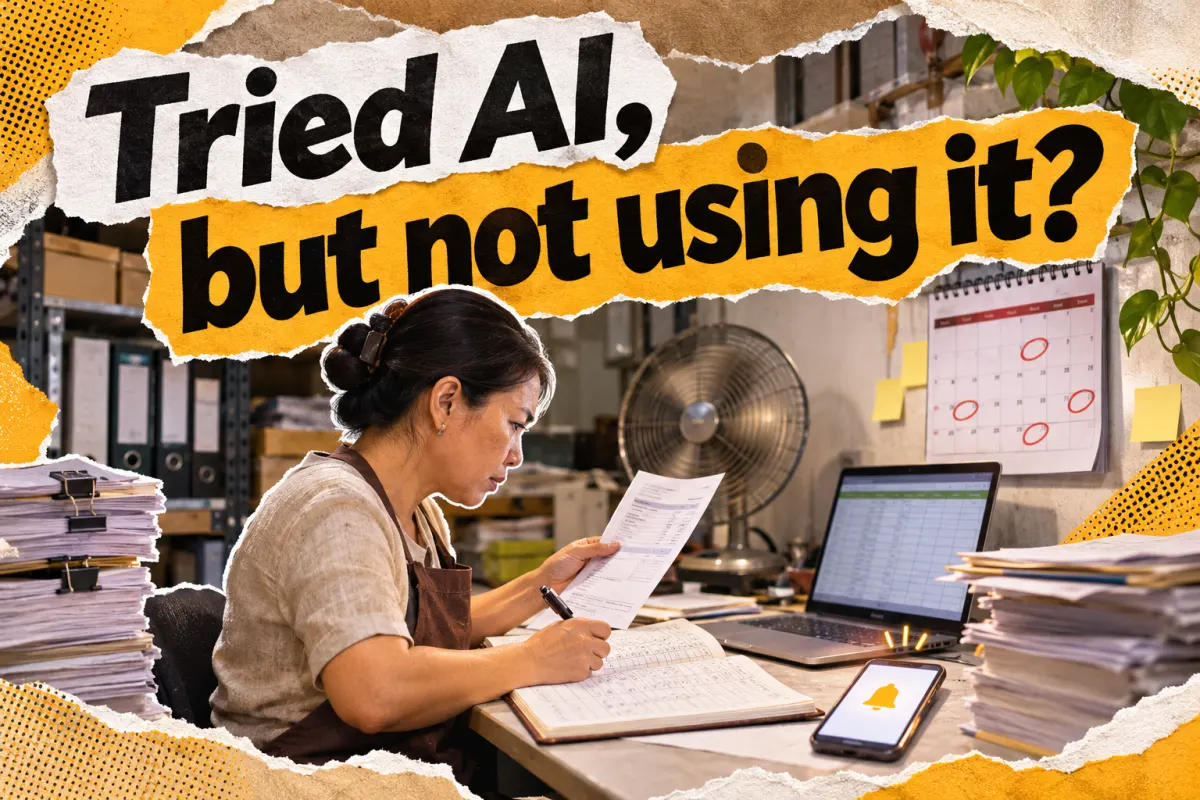
Southeast Asia has embraced AI at scale, but trying it and getting results from it are two different things. That gap is the most concrete opportunity in front of small and medium businesses right now.
The figure comes from Jasmin Lau, Singapore's Acting Minister for Manpower and Senior Minister of State for Digital Development and Information, speaking at the 41st ASEAN Roundtable convened by ISEAS.
A high adoption rate, a shallow depth of use
The same speech contained a more telling number: per capita, people in Southeast Asia use AI roughly one-tenth as often as Americans do. The minister's point, in substance, was that many people have tried AI — Singaporeans especially, who tend to answer the government's call to experiment — but most use it only superficially. Moving from "tried it" to "using it well" is the next stage.
Many owners have tried AI; few have put it into daily operations. That shortfall is where the most tangible competitive space of the next two to three years sits.
Why "used it" is not the same as "got results"
The speech identified a structural divide: large enterprises are better placed to deploy AI at scale, while SMEs may struggle to keep up. It did not elaborate on why, but anyone who has run a business can fill in the blanks. Big companies have IT departments, budgets and dedicated people watching process change. At an SME, the owner is that person — inspecting units by day, reconciling statements by night. However clever the AI, someone has to connect it to a specific task.
That explains high adoption alongside low depth. Having an employee use AI to draft a notice or polish a paragraph is a low bar. Asking AI to follow up on a leasing lead, chase an overdue bill, or turn meter readings into an invoice involves permissions, data and accountability — not just opening a chat box.
The counterargument: AI is far from our industry, let's just run the business
This is the objection we hear most often, and it sounds solid. Its logic: AI is a technology company's business. I do leasing, run a market, run a restaurant — the business logic hasn't changed in decades, so there's no need to chase the trend.
That holds under one condition — if your operating information is genuinely thin, your processes genuinely simple, and your books stay straight from memory. But once you manage dozens of units, hundreds of contracts, and monthly meter readings, billing and collection, the business itself is already an information business. According to the public feature description on the SHEYU AIMARKET website, its AI steward can take over actions such as leasing follow-up, bill collection and meter-reading-to-invoice. Write operations pass through a two-gate "preview — confirm" step, nothing is written to the database before execution, and the whole process leaves an audit trail.
The boundary should be stated plainly: it cannot decide for an owner whether to grant a tenant a rent waiver, and it cannot automatically secure any policy support or subsidy. A tool is a tool; business judgement remains a human matter.
What the judgement depends on
The judgement that "a window is opening" rests on two premises. First, the depth of AI use still has substantial room to grow — the speech says so explicitly. Second, the adoption gap between SMEs and large enterprises objectively exists — the speech points to that too. But the speech offers no path for how SMEs should close the gap, and promises no subsidy or support policy. This article makes no such promise either.
If a clear government funding scheme or procurement rule emerges later, that is a separate topic requiring verification against the official text. Within what this material can support, the opportunity is not in waiting for policy but in handing one specific, repetitive task to a tool first.
One thing to do now
Don't start by trying to digitise everything. Pick one thing you repeat every month that is also easy to get wrong — meter-reading and billing, say, or reminders for overdue bills — and see whether a system can take it over, with a person responsible only for final confirmation.
High AI adoption has already done the "knowing about it" part for you. What comes next is a race to make it a fixed action inside the business.
As for which tool, SHEYU AISITE-class products — the kind of leasing operations platform aimed at mixed-use markets and commercial complexes — are described on their website as covering asset and lease control, leasing CRM and a contract-and-billing engine, suited to operations with many units, complex contracts and books that need an audit trail. For a single small shop with simple business, such a system is genuinely unnecessary.